

Introduction
In today’s competitive online landscape, every business needs more than just a logo to stand out. If you want to build a digital brand identity that attracts customers and establishes trust, you need a clear strategy that combines branding, website optimization, content marketing, and reputation management.
A strong digital brand identity represents how people perceive your business online. From your website and social media profiles to your messaging and customer experience, everything contributes to the overall image of your brand.
Whether you are starting from scratch or refining an existing presence, learning how to build a digital brand identity is essential for long-term growth in 2026.What is a Digital Brand Identity? (More Than Just a Logo)
Many people assume branding only refers to logos and colors. However, when you build a digital brand identity, you are shaping the complete online experience customers have with your business.
A digital brand identity includes:
- Brand voice
- Visual elements
- Website experience
- Content strategy
- Online reputation
- Customer perception
Why Digital Identity Matters in 2026
Businesses that successfully build a digital brand identity enjoy several benefits:
- Increased trust and credibility.
- Better brand recognition.
- Stronger customer loyalty.
- Higher conversion opportunities.
- Competitive advantage in crowded markets.
| Weak Brand | Strong Brand |
| No identity | Clear identity |
| Low trust | High trust |
| No SEO | Strong SEO |
According to digital marketing expert Neil Patel, maintaining consistency across digital channels significantly improves brand recognition and customer trust.
Digital Brand Identity Framework
Define Purpose
↓
Know Your Audience
↓
Create Visual Identity
↓
Build Your Website
↓
Develop Content Strategy
↓
Improve SEO Visibility
↓
Establish Social Proof
↓
Maintain Brand Consistency
↓
Long-Term Authority & Growth
Conduct Competitor Analysis for Stronger Branding
Competitor analysis helps you understand what other businesses in your niche are doing and how you can do better.
By analyzing competitors, you can identify gaps in the market and create a more impactful digital brand identity.
What to analyze:
- Their website design and user experience
- Content strategy and SEO performance
- Social media presence and engagement
- Branding style and messaging tone
Why it matters:
Competitor research allows you to avoid mistakes, adopt successful strategies, and build a stronger and more unique brand identity.
Step 1: Define Your Brand’s Core Purpose and Target Audience
Many successful agencies prioritize defining their brand identity early, as it helps establish trust and create a strong market position. This approach is especially valuable for entrepreneurs who are starting a digital marketing business from scratch, since a clear identity can influence everything from client acquisition to long-term growth.
The first step to build a digital brand identity is understanding who you serve and what problem your business solves.
Ask yourself:
- Who is your ideal customer?
- What are your brand values?
- Why should customers choose you?
- What makes your business different?
Define Your Brand Voice
Your brand personality should remain consistent across every platform.
Examples include:
- Professional
- Friendly
- Authoritative
- Educational
- Creative
A consistent voice helps customers recognize and trust your brand.
Define Your Brand Positioning in the Market
Brand positioning is the process of defining how your business is perceived compared to competitors in your industry. When you build a digital brand identity, positioning helps you stand out clearly in a crowded market.
A strong brand position answers one key question: Why should customers choose you over others?
Key Elements of Brand Positioning:
- Identify your unique value proposition (UVP)
- Understand your competitors’ strengths and weaknesses
- Define what makes your brand different
- Focus on solving a specific customer problem better than others
Step 2: Establish Your Visual Identity Elements
Visual branding is one of the most important aspects when you build a digital brand identity.
Typography and Fonts
Choose clean and professional fonts that align with your business personality.
Color Psychology
Colors influence emotions and purchasing decisions.
Examples:
| Color | Meaning |
| Blue | Trust and professionalism |
| Black | Authority and sophistication |
| Green | Growth and sustainability |
| Orange | Creativity and energy |
| Yellow | Positivity and innovation |
Create a Versatile Logo
Your logo should:
- Be simple and memorable.
- Work across websites and social media.
- Remain recognizable on all screen sizes.
Step 3: Design a High-Converting Digital Launchpad (Your Website)
Your website acts as the foundation of your online presence. To successfully build a digital brand identity, your website must deliver a seamless user experience.
Focus on:
- Mobile responsiveness.
- Fast loading speed.
- Easy navigation.
- Conversion-focused layouts.
- Secure browsing.
Your website is the primary anchor of your brand identity. When designing a digital platform, ensuring mobile responsiveness and conversion-optimised structure is non-negotiable. Experienced development and growth experts, such as the digital specialists atDigital pehchan, emphasize that combining user-centric web architecture with data-driven optimisation is crucial for turning cold traffic into loyal brand advocates.
Businesses looking to strengthen their online presence can explore Zenith Forge’s comprehensive guide on digital marketing strategies to understand how SEO, content marketing, and customer-focused campaigns contribute to sustainable business growth.
Prioritize User Experience
Rand Fishkin and many experienced digital marketers consistently highlight the importance of user experience in building trust and improving search visibility.
A website that frustrates users often leads to high bounce rates and lower conversions.
Focus on Customer Experience (CX) Across All Touchpoints
Customer experience is how users feel at every interaction with your brand — before, during, and after purchase.
Key areas:
- Smooth website navigation
- Fast response to customer queries
- Easy checkout or inquiry process
- Post-sale support and communication
Step 4: Map Out Your Brand Voice Across Social Media Platforms
If you want to build a digital brand identity that customers remember, consistency across social media channels is essential.
Different platforms serve different purposes:
- LinkedIn for professional networking.
- Instagram for visual storytelling.
- Facebook for community engagement.
- X (Twitter) for real-time conversations.
Create Content Pillars
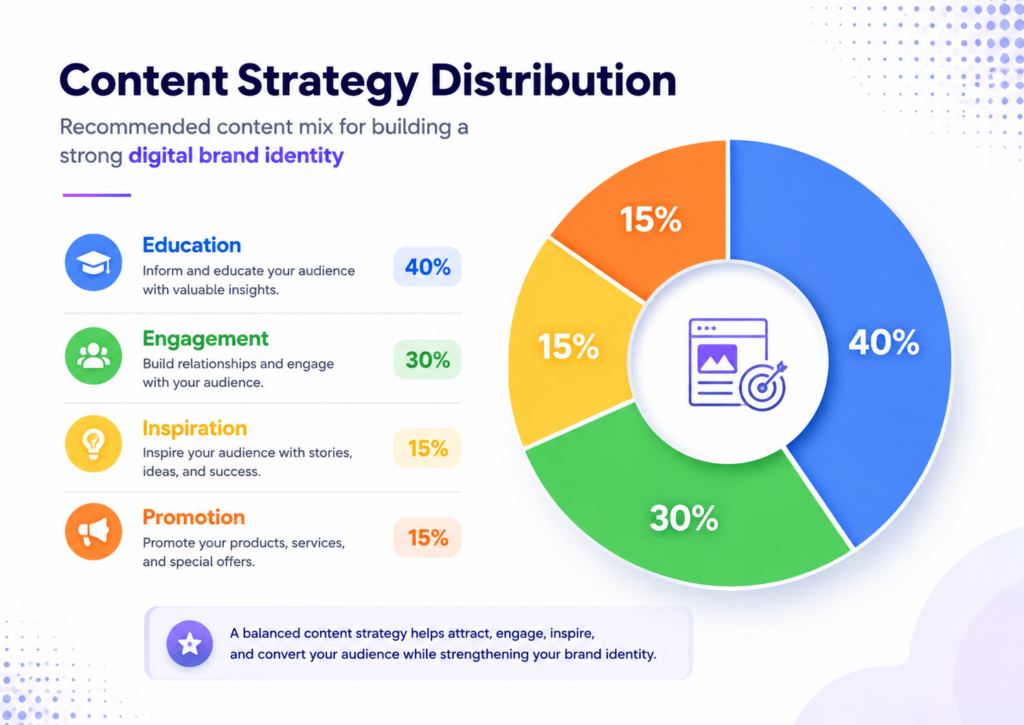
This chart shows the recommended content distribution strategy for building a strong digital brand identity, including education, engagement, promotion, and inspiration.
Successful brands organize their content around four pillars:
Educate
Share tutorials, guides, and industry knowledge.
Entertain
Create engaging and interactive content.
Inspire
Showcase success stories and behind-the-scenes experiences.
Promote
Highlight products and services strategically.
Step 5: Leverage Content Marketing and SEO for Long-Term Authority
In an increasingly competitive online environment, brands often need a strategic approach to stand out.
Digital Pehchan brings together branding, SEO, and performance marketing expertise to help businesses establish a distinctive digital presence and support sustainable long-term growth.
Content marketing is one of the most effective ways to build a digital brand identity and establish authority.
Publishing valuable content helps businesses:
- Solve customer problems.
- Increase organic traffic.
- Improve search visibility.
- Build trust over time.
Build Topic Authority
Instead of focusing on isolated keywords, create clusters around related topics.
Examples:
- Branding
- SEO
- Content Marketing
- Website Development
- Social Media Marketing
This approach strengthens topical authority and improves internal linking.
Growth Impact of Strong Branding
Brand Consistency
↓
Customer Trust
↓
Better Engagement
↓
Higher Conversions
↓
Customer Loyalty
↓
Long-Term Business Growth
Step 6: Social Proof and Online Reputation Management (ORM)
A strong reputation is essential when you build a digital brand identity.
Showcase:
- Client testimonials.
- Case studies.
- User-generated content.
- Google reviews.
- Customer success stories.
Maintain Your Online Presence
Regularly monitor:
- Google Business Profile.
- Review platforms.
- Social media mentions.
- Local directories.
Responding to reviews professionally demonstrates credibility and transparency.
Step 7: Maintain Brand Consistency Across Every Customer Touchpoint
Many businesses overlook consistency, yet it is one of the most powerful ways to build a digital brand identity.
Ensure consistency across:
- Website
- Blog content
- Email campaigns
- Social media
- Advertisements
- Customer support
People trust brands they recognize repeatedly.
How the Future of Digital Marketing Influences Brand Identity
As businesses build a digital brand identity, staying prepared for the future and keeping up with evolving marketing trends helps them remain competitive and adapt to changing consumer behavior.
Some of the key trends shaping digital branding and marketing include:
- Artificial intelligence and automation
- Personalized customer experiences
- Data-driven marketing strategies
- Changing user behavior and emerging platforms
- Innovative and adaptive marketing approaches
Brands that embrace these changes are better positioned to strengthen their online presence and maintain a competitive advantage. To gain deeper insights, explore the bright future of digital marketing and understand how businesses can prepare for upcoming industry changes.
What is a digital brand identity?
A digital brand identity is the overall perception of your business online. It includes your logo, website, content, social media presence, brand voice, customer experience, and online reputation.
Why is digital brand identity important for businesses?
A strong digital brand identity helps build trust, improve brand recognition, attract customers, increase conversions, and create long-term customer loyalty.
How can I build a digital brand identity from scratch?
You can build a digital brand identity by defining your target audience, creating a unique brand voice, designing visual elements, developing a professional website, publishing valuable content, and maintaining consistency across all channels.
What are the key elements of a digital brand identity?
The main elements include:
Brand Voice
Logo & Visual Design
Website Experience
Content Strategy
Social Media Presence
Online Reputation
Customer Experience
How does SEO help build a digital brand identity?
SEO improves your online visibility in search engines, drives targeted traffic, increases credibility, and helps establish your brand as an authority in your industry.
What role does social media play in digital branding?
Social media helps businesses engage with their audience, increase brand awareness, showcase expertise, and build stronger relationships with potential customers.
How can Digital Pehchan help build my digital brand identity?
Digital Pehchan provides SEO, website development, social media marketing, Google Ads, personal branding, and reputation management services to help businesses create a powerful and recognizable digital presence.
Conclusion: Consistency is the Key to Recognition
Learning how to build a digital brand identity is not about creating a logo overnight. It is a long-term process that combines strategy, design, content, and customer experience.
Businesses that consistently communicate their values and provide exceptional experiences are far more likely to earn trust and authority.
In 2026, brands are remembered not simply because of their logos but because of the experiences they create. If you want sustainable growth, now is the right time to build a digital brand identity that reflects your values and connects with your audience.
A strong digital brand identity created today can become one of your biggest competitive advantages tomorrow.
Ready to Take Your Brand to the Next Level?
Now that you understand how to build a digital brand identity, it’s time to turn strategy into action. Connect with Digital Pehchan to explore tailored solutions and discover how a strong online presence can support sustainable business growth.
About the author
Nasreen Gauhar is the Founder of Zenith Forge, a digital marketing agency in Siwan, Bihar, specializing in SEO, website development, Google Ads, and social media marketing. He helps businesses build a strong online presence and achieve long-term growth through data-driven digital strategies.